
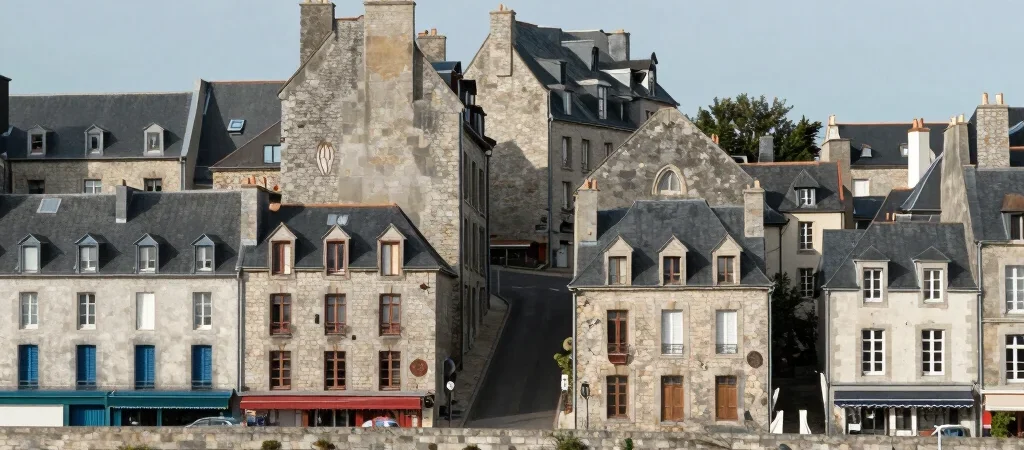
At Saint-Goustan, Auray’s riverside quarter, it is tempting to stop at the quay and take in the old buildings. Stay a little longer and look uphill, toward the streets that rise away from the water. The relationship between river, slope, and built form is part of the place’s character.
Start at the water’s edge
The quay gives a clear sense of the river as a public edge, while the buildings behind it make the space feel enclosed and human in scale. From there, notice how routes climb and turn rather than extending as a flat grid. The topography shapes the experience as much as the façades do.
Look beyond the façades
Stone, window openings, rooflines, and the spacing between buildings reward close attention, but architecture is not separate from its setting. A narrow street can connect the lower riverfront to higher parts of town; a view between buildings can bring the water back into sight. Read these as observations of the present landscape, not as a complete account of the quarter’s history.
Make room for everyday life
Saint-Goustan is a lived-in urban place as well as a heritage setting, so keep doorways clear and follow local signs when walking through it. For dates, protections, or restoration details, consult public heritage resources rather than relying on appearance alone. A useful visit leaves you noticing how the town meets the river, not just how it photographs.